How to measure mechanic productivity at your repair shop
Measuring team productivity is one of the biggest challenges for any business, and auto repair shops are no different. Many managers believe mechanic productivity comes down to the number of cars serviced per day. In practice, it is more complex. A shop can be full and still have low productivity. Knowing how to measure this metric is essential for making better decisions. Here is how to do it.
Mechanic productivity isn't about working a lot
There is an important difference between being productive and being busy. A mechanic can spend the whole day working, but if there is rework, mistakes, delays and wrong diagnoses, real productivity drops.
So what is productivity? It is tied to efficiency: how much value the team can generate in the time available while maintaining quality and organization. There is no point speeding up to "do more" if it leads to errors, warranty comebacks and lower quality.
Mechanic productivity metrics
Available hours vs. productive hours
One of the main metrics is the ratio between available hours and productive hours:
- available hours: the total time the mechanic spends at the shop
- productive hours: the time actually turned into billable work.
If a mechanic works 8 hours a day but only 5 become billable work, there is an operational loss. To run the numbers, see the step-by-step guide to calculating productivity.
Measuring this time isn't about watching over mechanics, but about finding the bottlenecks that keep the shop from using all available hours.
Rework
Rework is a common and often overlooked problem. When a vehicle comes back because of a faulty job, the technician has to put in new hours without generating new revenue. Sometimes it ties up more than one mechanic and delays other jobs. That is why productivity should never be analyzed separately from technical quality.
Job completion time
Each type of job has an expected average time. Tracking this metric helps identify:
- jobs that take longer than they should
- staff who need training
- organizational problems
- process failures.
When the analysis shows a need for training, a career path for mechanics helps guide the team's development.
Technology as a productivity ally
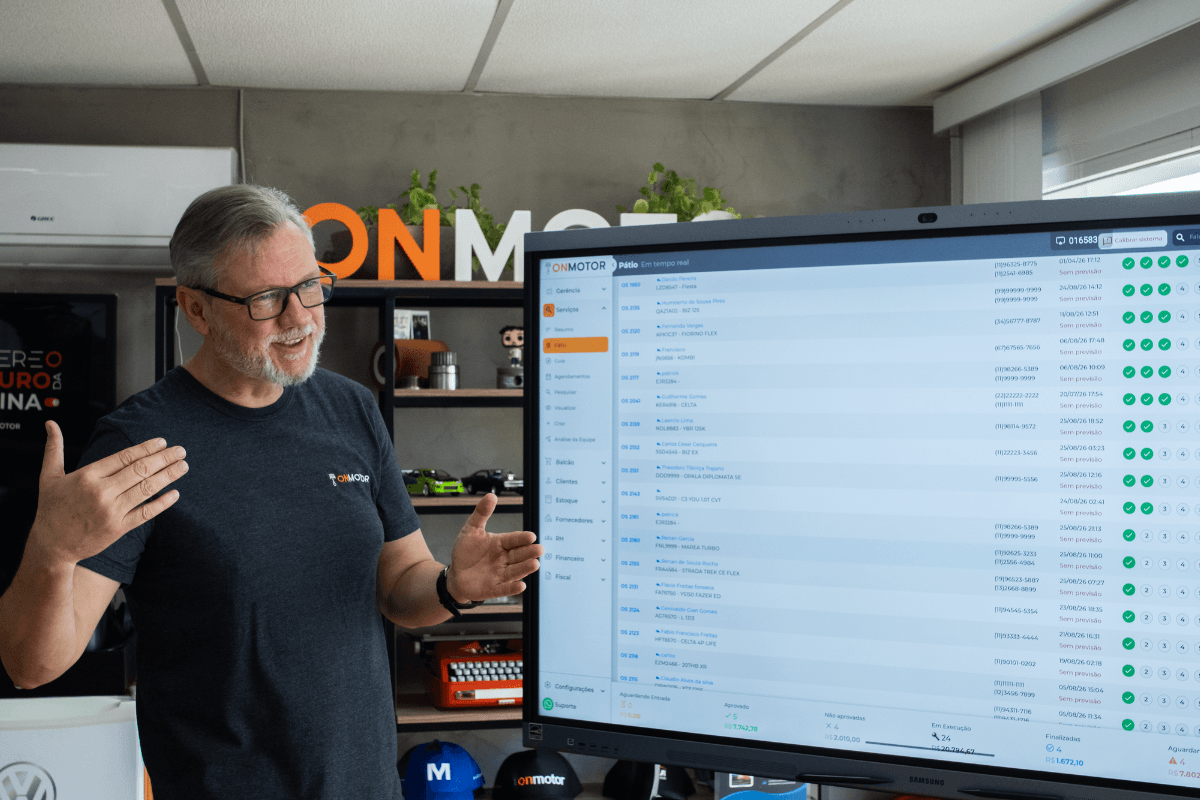
Technology makes this tracking much easier. With a repair shop management system, vehicles coming in and going out are recorded in work orders, which helps track deadlines, spot comebacks and produce reports for analysis.
Track it consistently
Measuring mechanic productivity is essential to improving shop efficiency. Besides boosting profitability, it helps reduce waste. But productivity needs to be tracked continuously, not just when results are being questioned.
Count on Onmotor, a system developed in Brazil for the daily routine of repair shops. Contact us or see the plans.