Repair shop parts control: profit sitting on your shelves
In the daily routine of an auto repair shop, attention usually goes to jobs, deadlines and customers. But there is a quiet area that can decide whether the business really makes a profit or just seems to: parts control. A large share of the shop's capital sits on its shelves. Without control, that money stays idle, loses value and squeezes cash flow. Often the problem isn't a lack of revenue but a lack of management. Here is how to change that.
Why parts control matters at your repair shop
Uncontrolled stock is idle money
Every part you buy is an investment. The trouble starts when it doesn't move. Parts bought "just in case", orders placed from memory and restocking with no history gradually build up a bloated inventory.
Over time, the consequences show up:
- not enough cash for monthly expenses
- having to pay suppliers in installments
- difficulty investing in the shop.
The shop keeps working, but cash is always tight. If that is already happening, read our article on cash shortages at the shop.
Duplicate purchases happen more than you think
Without control, the team relies on memory or manual checks, which easily fail in the rush of the day.
The scenario is a classic: the mechanic needs a part, can't find it, assumes it ran out and tells the manager. A new order is placed. Later, while tidying the shelf, someone finds the part was in stock all along.
Idle parts become losses
Besides taking up space, forgotten parts lose value. Vehicle models change, suppliers update part numbers and some components stop selling. What was inventory becomes a loss.
The loss doesn't start when the part is thrown out. It starts when the part stops moving.
How to fix the problem
To control inventory, the shop needs to leave behind notebooks, scattered spreadsheets and the team's memory, and adopt a method in which every movement is recorded.
When inventory is linked to work orders, you can tell:
- which part came in
- which vehicle it went into
- how long it has been in storage
- when it needs restocking.
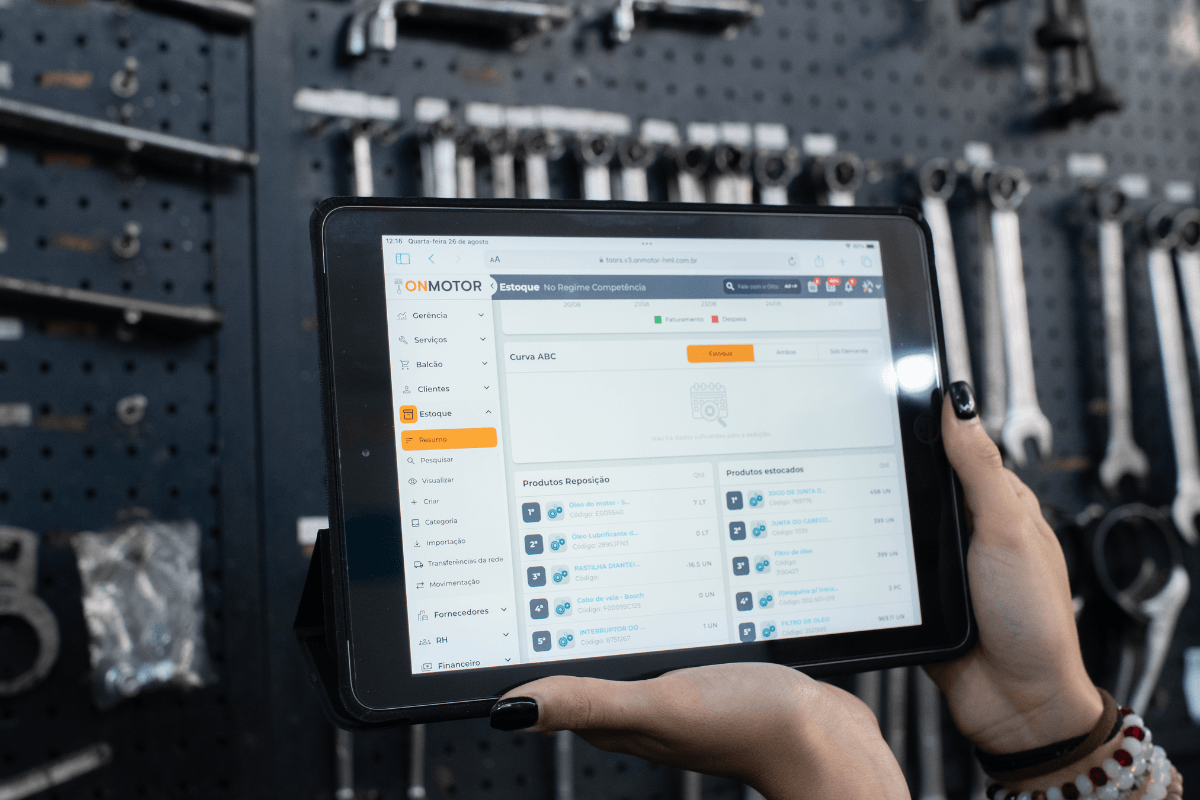
A repair shop management system like Onmotor, developed in Brazil, helps with this tracking, which prevents unnecessary purchases and shows which items really move. To organize the physical side, see also how to organize your repair shop parts inventory.
Take a look at your shelves
Many shops work hard and earn little. The reason often isn't labor or prices, but internal management.
Inventory can be an ally or a burden. Without control, it eats up capital. Well managed, it turns into profit.
Before chasing more jobs, take a look at your shelves. Part of your business's financial solution may already be there, just waiting to be organized.
Contact our team and see Onmotor's plans.