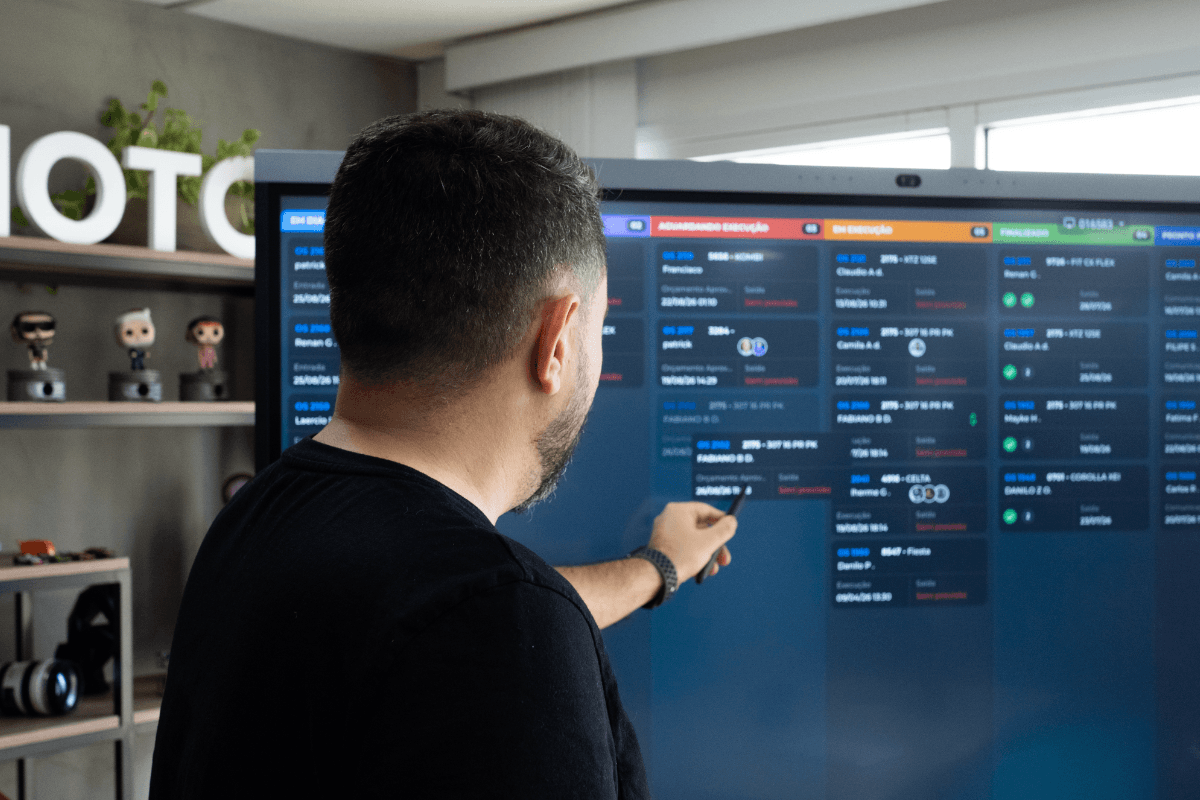
Weekly planning at your repair shop: stop relying on memory
Trying to remember deadlines, customers and pending parts in your head works until the day it does not. Without planning, details slip, deadlines are missed and rework piles up. Weekly planning fixes that: it keeps everything in order, improves workflow and brings predictability to the shop's routine. Here is how to put it into practice step by step.
How weekly planning works
Weekly planning means organizing the shop's main tasks in advance so that each day has clear priorities. With it, you can:
- set daily priorities, so nothing important gets left behind
- control deadlines and avoid oversights
- balance the team's workload, sharing work fairly
- speed up service
- raise productivity, since everyone knows what to do
- make a good impression on customers, who notice the organization.
Step-by-step weekly planning for your shop
List the week's tasks
Write down everything that needs doing, from complex repairs to simple checkups. Also include:
- pending estimates
- parts orders with suppliers
- customer follow-ups
- jobs already booked.
Bringing all this information into one place gives a full view of the week and makes planning more realistic.
Set priorities
Not every task is equally urgent. Decide what must be handled right away and what can wait a few days. That way, critical jobs come first and the rest fit into the flow, without the constant feeling of rushing.
Share out the work
A smooth-running shop depends on everyone being aligned. Assign work fairly, considering each person's skills and avoiding overload. The result is a more engaged team and better service.
Use organization tools
A visible task board, a spreadsheet or a management system makes planning transparent and lets everyone follow progress.
Review the plan at the end of the week
Set aside time to look at what worked and what needs to change. Consider:
- deadlines: were jobs delivered on time?
- team: was anyone overloaded, or was the split right?
- customers: did service meet expectations?
- processes: did the workflow run smoothly or were there interruptions?
- resources: were parts, tools and supplies used well?
This review creates a cycle of continuous improvement and helps you plan the next week more precisely.
Organize your routine with Onmotor
With Onmotor, developed in Brazil, you centralize bookings, work orders, inventory and other tasks in one system. See the plans, learn more about Onmotor or talk to our team.