Accounting for repair shops: organization and tax regimes
Doing good work is not enough to keep a repair shop healthy. Taxes, invoices, legal obligations and cash flow all need to be in order, and that is where accounting makes a difference. With good accounting, managers decide based on reliable numbers, pay only the taxes they owe and avoid trouble with the tax authorities. Here is how it affects management, using Brazil's rules as the reference, and how the Onmotor system can simplify the admin routine.
How accounting affects repair shop management
Repair shop accounting covers everything from recording transactions to choosing a tax regime. These processes may seem complex, but they are essential for staying compliant and growing sustainably. Key functions include:
- tax planning, so taxes are paid correctly and without overpaying
- guidance on issuing and controlling notas fiscais (Brazilian electronic invoices)
- financial organization and cash flow projections
- compliance with laws and filing obligations.
How to choose a tax regime
Choosing the right tax regime is one of the most important accounting decisions for a shop, because it determines how much tax you pay. It should take into account revenue, costs, margin and business structure. In Brazil, the main regimes are:
- Simples Nacional: usually suits small and mid-sized companies within the revenue cap, with unified, simplified tax calculation
- Lucro Presumido (presumed profit): taxes are calculated on a profit margin presumed by law, which can pay off for companies whose actual margin is above that presumption
- Lucro Real (actual profit): taxes apply to actual profit, which tends to suit businesses with low or variable margins.
The rules change often, and Brazil's consumption tax reform is being phased in. That is why the decision should be made with your accountant, based on your shop's numbers.
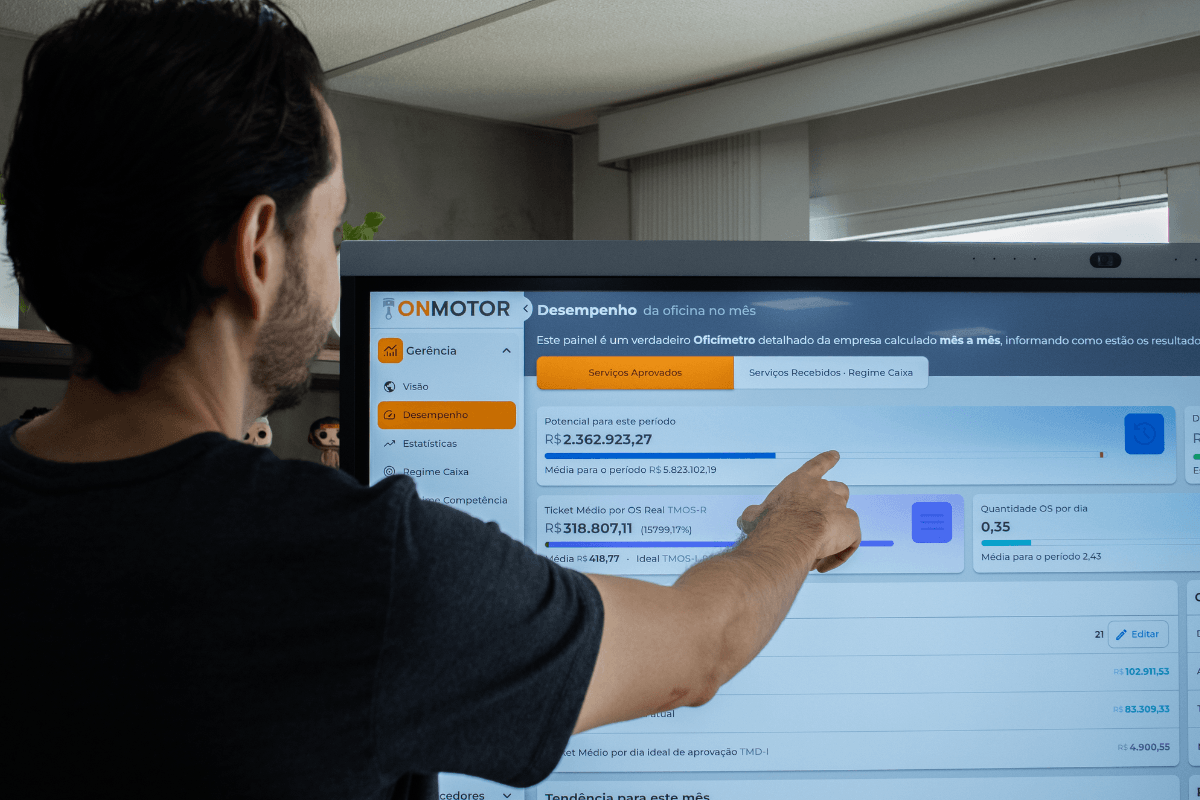
With Onmotor, you can generate financial reports that help your accountant with this analysis.
Where Onmotor fits into shop accounting
Onmotor does not replace your accountant, but it makes their job easier. The system brings together inventory, sales and revenue data in an integrated way, reducing errors and speeding up information sharing. Benefits include:
- issuing and controlling invoices within the system
- reports on revenue and costs
- a history of financial transactions for reference
- settings that adapt to the shop's routine.
Organized accounting with Onmotor
With a good accountant and a management system like Onmotor, your shop's numbers become strategic decisions. See the plans or talk to our team.