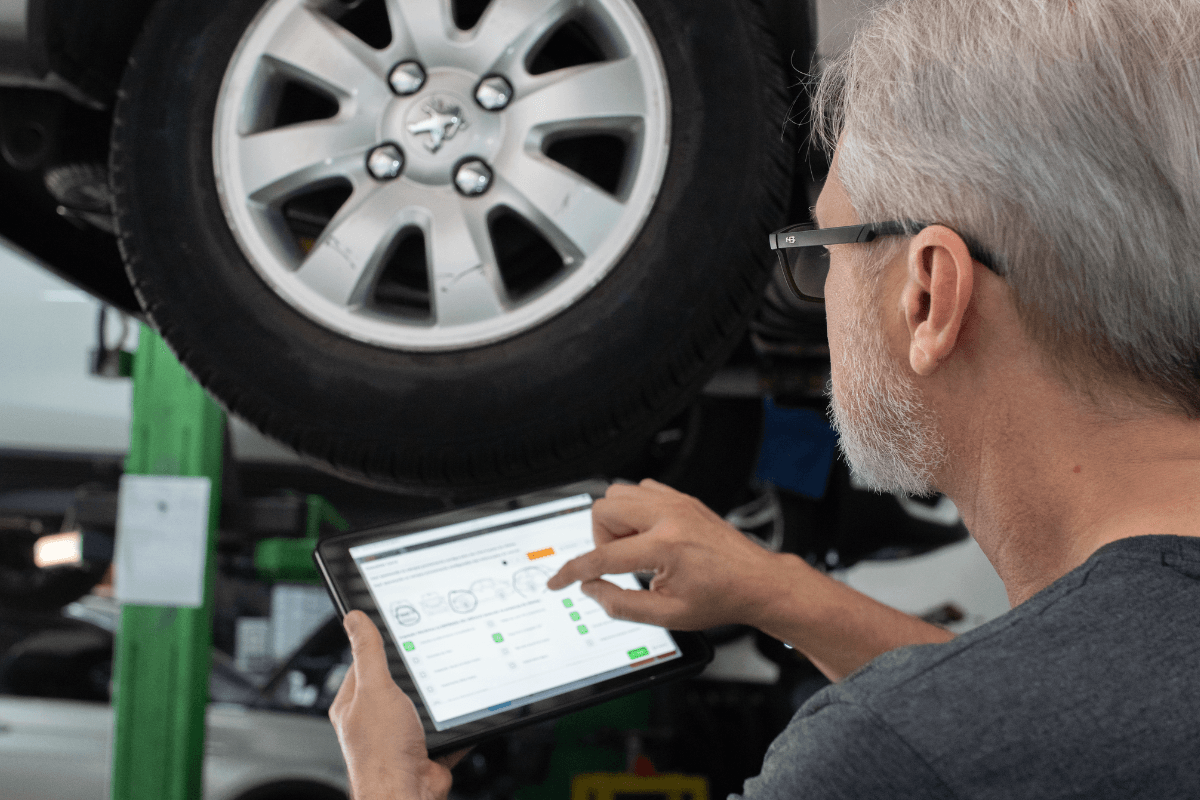
Digital work orders for repair shops: what changes
Digital transformation is already a reality in many businesses, and auto repair shops are no exception. Digital work orders are among the most widely used tools in day-to-day shop management. They replace manual processes and give you more control over every step of the job. Many shops still prefer paper and scattered spreadsheets, but a reliable system can change the routine for the better. Here is what changes in practice.
What a digital work order is
A digital work order is the electronic record of all the information about a vehicle's service. It includes:
- customer details
- vehicle details
- service history
- parts used
- the diagnosis
- the estimate amount.
Unlike paper, which is easily lost, this information is stored in the system. For an overview of the benefits, see also our article on digital work orders.
No more paper forms, more security
One of the first effects of switching to digital work orders is the end of handwritten notes. Businesses that still rely on paper face several problems: lost information, miscommunication, incomplete data and illegible handwriting. That raises the chance of doing the wrong job, affecting both the final price and customer trust.
Faster service
Time spent filling in forms can slow down service and create a line at the front desk, besides frustrating customers. With digital work orders, customer and vehicle details are already on file, which speeds up the process. The result is a more organized, productive and credible shop.
Complete service history
One of the biggest benefits of going digital is having a detailed history for each vehicle. Whenever the car comes back, you can see what was done, which parts were replaced and what is still pending. This makes the shop more transparent with customers, simplifies future diagnoses and helps with warranty control. With centralized records, errors decrease and so do losses.
Better financial control
Digital work orders also support the business's financial health. By correctly recording parts, labor and other costs for each job, the manager has data to make better decisions, and managing cash, expenses and profitability becomes much easier. Without that control, even shops with plenty of customers can struggle to turn a profit.
Technology that works for your team
Digital work orders don't replace people, but they help everyone make better use of their time and productivity. In practice, shops that use a management system see their performance much more clearly.
The Onmotor system, developed in Brazil, brings work orders, estimates and history together in one place, with plans for different routines. Talk to our team on WhatsApp.